MCS, Academics-Computer-Science
Can You Get a Master's in CS While Working Full-Time?
October 16, 2026
If you are considering a Master of Computer Science but already have a full-time job, you may be asking yourself a very practical question: Can I realistically do both?
The short answer is yes. But I would add something important: success is not about finding unlimited free time. It is about choosing a program that fits your life, setting realistic expectations, and being intentional about how you use the time you have.
I understand that challenge personally. While earning my Master of Computer Science at the University of Texas at El Paso, I also earned my teaching certification and began teaching Career and Technology for El Paso ISD. Later in my career, when I moved into full-time work in information technology, I continued teaching part-time at the university level.
Those experiences taught me that your career and education do not always have to happen one after the other. Sometimes, they can strengthen each other.
Your Job Can Actually Become Part of Your Education
One advantage working professionals have in a graduate computer science program is context.
When you study topics such as software engineering, algorithms, artificial intelligence, cybersecurity, or data science, you are not learning those concepts in isolation. You may already be seeing technology solve problems in your workplace.
That gives you an opportunity to ask better questions.
How would I apply this concept at work? Could this approach make a process more efficient? Is there a security issue I recognize now that I would not have noticed six months ago?
Graduate school should not simply give you another credential. It should change the way you approach problems.
That is one reason I encourage students to look for opportunities to connect what they learn in class with the challenges they see professionally.
Be Realistic About the Commitment
Flexibility is important, but flexible does not mean effortless.
Computer science requires time to think, troubleshoot, write code, study concepts, and sometimes figure out why something that should work simply does not.
My advice is to build school into your schedule before the semester begins.
Look at your workweek and identify when you realistically have time for coursework. For one student, that might mean two evenings during the week and several hours on Saturday. For another, mornings may work better.
The specific schedule matters less than having one.
And do not wait until you have a perfectly quiet week to get started. Working professionals rarely have perfectly quiet weeks.
Find a Program Designed for Working Professionals
The structure of the program matters just as much as your personal time management.
At Concordia University Texas, our Master of Computer Science was designed with working professionals in mind. Students can choose a fully online format or our Hybrid Professional Edge format, which combines online learning with an in-person Residency Weekend in Austin each semester. The program can be completed in as few as 16 months.
For professionals who want the flexibility of online learning but still value interaction with faculty and classmates, those intentional opportunities to connect can make a difference.
I believe graduate students should have people they can turn to when they encounter a difficult concept, have a career question, or want to talk through how something applies outside the classroom.
Ready to take the next step without putting your career on hold?
Apply to the Master of Computer Science program at Concordia University Texas and build your technical skills through a fully online or hybrid format designed for working professionals.
Apply TodayYou Do Not Have to Put Your Career on Hold
Sometimes prospective students assume they need to wait for the "right time" to earn a master's degree.
Maybe work will slow down next year. Maybe life will become less busy. Maybe there will eventually be more time.
In my experience, that perfect moment rarely arrives.
Instead, the better question may be: Can I find a program and a routine that make graduate school possible within the life I already have?
For many working professionals, the answer is yes.
You may even find that continuing to work while earning your degree gives you something valuable. You can bring professional experiences into the classroom and take new ideas from the classroom back into your career.
Computer science is constantly evolving. There will always be something new to learn.
If advancing your technical skills or moving into the next stage of your career is important to you, working full-time does not have to prevent you from pursuing a Master of Computer Science. With the right structure, discipline, and support, the two can work together.
At Concordia University Texas, our goal is to give working professionals a path to keep moving forward without putting the rest of their lives on hold.
About the Author
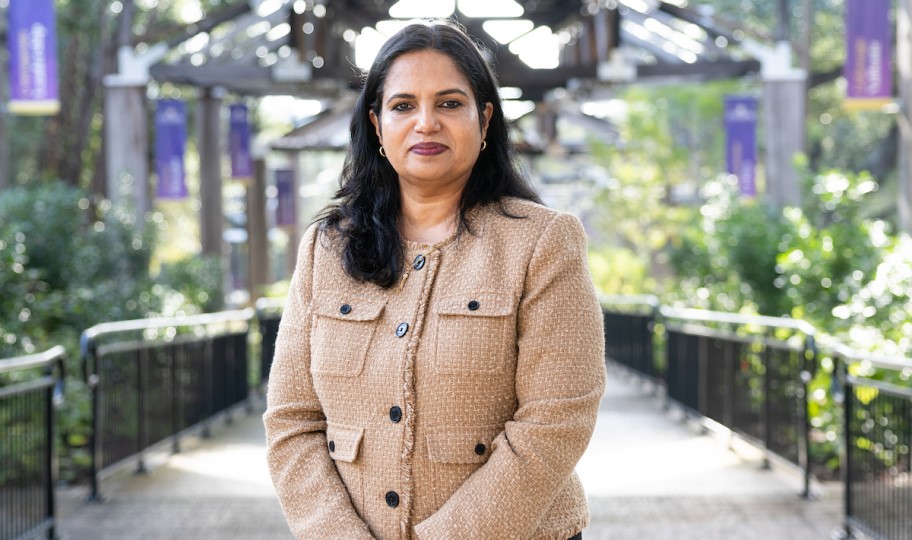
Dr. Bindu George serves as Program Chair and Assistant Professor of Computer Science and Information Systems at Concordia University Texas. With over 20 years of experience in academia, software engineering and information technology, she connects classroom learning with industry practice through teaching, curriculum development and student mentorship.